
Rethinking Community College Success: Arkansas's Workforce Story, Part 3
More Than Training: Support That Helps Students Succeed
In our September series on community college workforce programs, we have discussed the different types of programs and the Richmond Fed's push to redefine success beyond the traditional metrics of higher education. But focusing only on outcomes ignores the incredible work of helping students cross the finish line.
When students arrive on campus, they bring with them the full weight of the barriers they face every day. They may have an empty refrigerator, a childcare gap that threatens class attendance, and fears about not being able to pay rent. Addressing those stressors is the difference between a student who finishes and one who disappears.
In Part 3 of our series, we turn to how supportive services like childcare, transportation, and financial assistance help keep students enrolled, focused, and moving toward completion, even when life is working against them.
Part 3: Supportive Services are Essential to Workforce Development
A new report by the Richmond Federal Reserve confirms that support services matter, but they're unevenly delivered. In a survey of 159 colleges across 26 states, including Arkansas, they found that colleges commonly provide academic and career services, transfer advising, and early alert systems for students at risk of failing or dropping out. But the supports that address the most destabilizing barriers (i.e., transportation, childcare, housing) are less common.
Why the gap? The survey finds that colleges are stretched thin, and some barriers are steeper than others.
Nearly every college named cost as the top obstacle to expanding services.
Even when funding is available, many community colleges lack access to mental health services and quality childcare facilities.
The money that does flow does not reach everyone. Most services run on grants and short-term investments, forcing colleges to compete for limited dollars and making it hard to build anything sustainable.
The pattern is consistent across all surveyed states. Colleges know what students need to succeed, but they lack the sustained funding to deliver it at scale.
What happens when public funding supports student success?
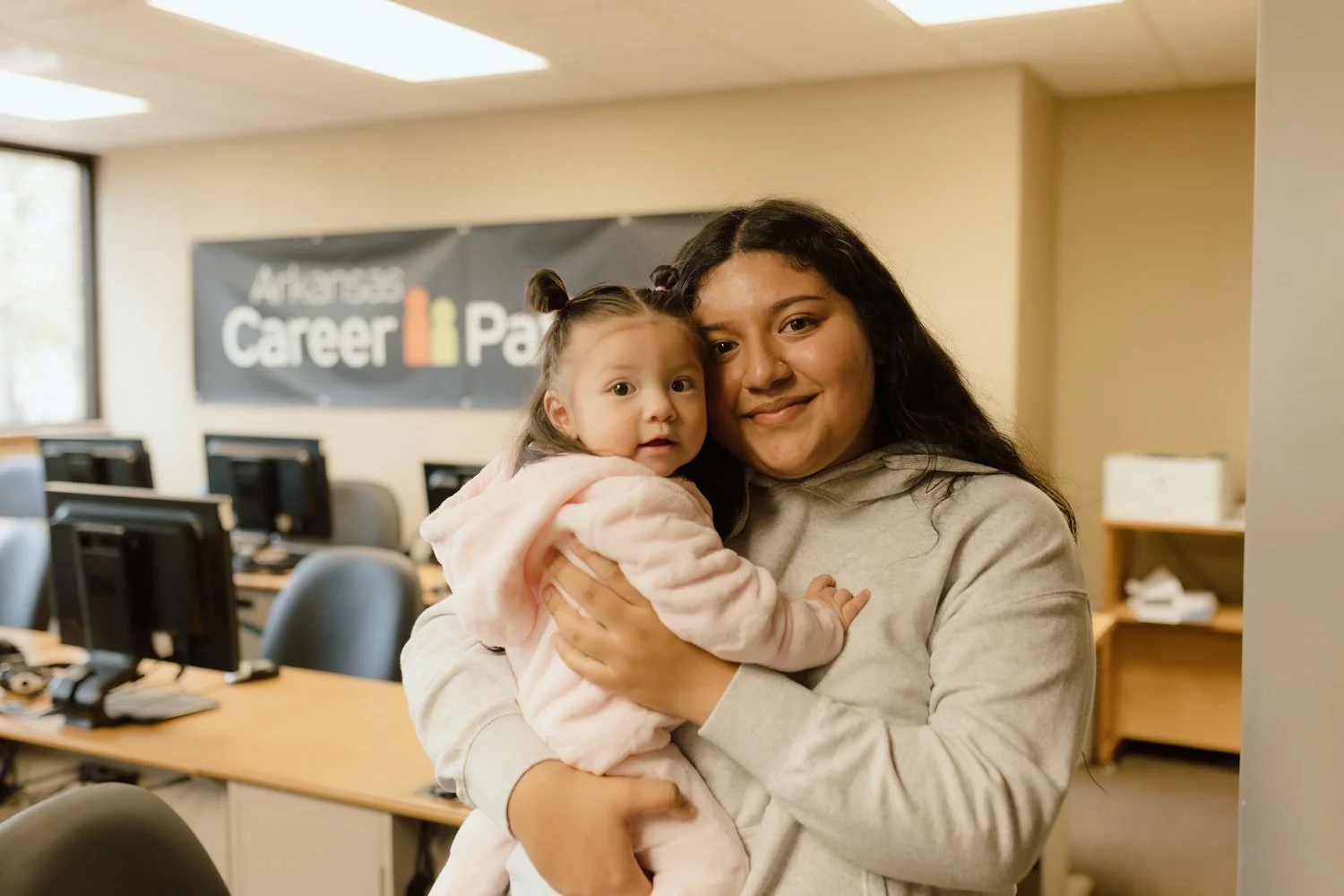
One of the nation’s most respected programs addressing this problem is right here in Arkansas. Since 2006, the Arkansas Career Pathways Initiative (CPI) has provided case management and supportive services to qualifying low-income parents at all 22 community colleges and three technical centers.
Utilizing a grant funded by federal TANF dollars via the Arkansas Department of Human Services, CPI helps eligible student parents cover tuition, books, supplies, childcare, and transportation. Students are also paired with a counselor for advising, career coaching, mentoring, and other customized services (i.e., referrals to community and public services) based on individual needs assessments.
What does this mean for students?
105,000+ low-income Arkansas parents have participated in CPI since 2006.
CPI students graduate with a certificate or degree at more than twice the rate of their college peers.
Almost 9 in 10 CPI completers were employed and earning a higher wage than similar low-income parents in their communities.
The success of CPI proves that when students get the support they need, they succeed. When students succeed, employers in key industries get skilled workers. CPI currently reaches about 5% of the total student enrollment at community colleges. Imagine what Arkansas’s workforce pipeline would look like if all students received this level of holistic support.
So what’s next?
Over this series, the numbers tell a consistent story. Arkansas's community colleges rank high in workforce credential and certificate completion. They train tens of thousands of Arkansans in trades, both in classrooms and in noncredit Professional Skills Training programs, that reach further than the data can currently capture. And when students get real support through programs like the Career Pathways Initiative, they finish at more than double the rate of their peers and go on to earn more and strengthen the workforce their communities depend on.
Building our state’s workforce isn't just about who walks in the door. It's about what happens once they're inside, and whether the systems around them, funding, staffing, data, and support, are built to help them stay and succeed.
Community colleges provided data for the Richmond Fed Wraparound Services report. Read the full report HERE. CPI data provided by the Arkansas Division of Higher Education and College Count$ research.